
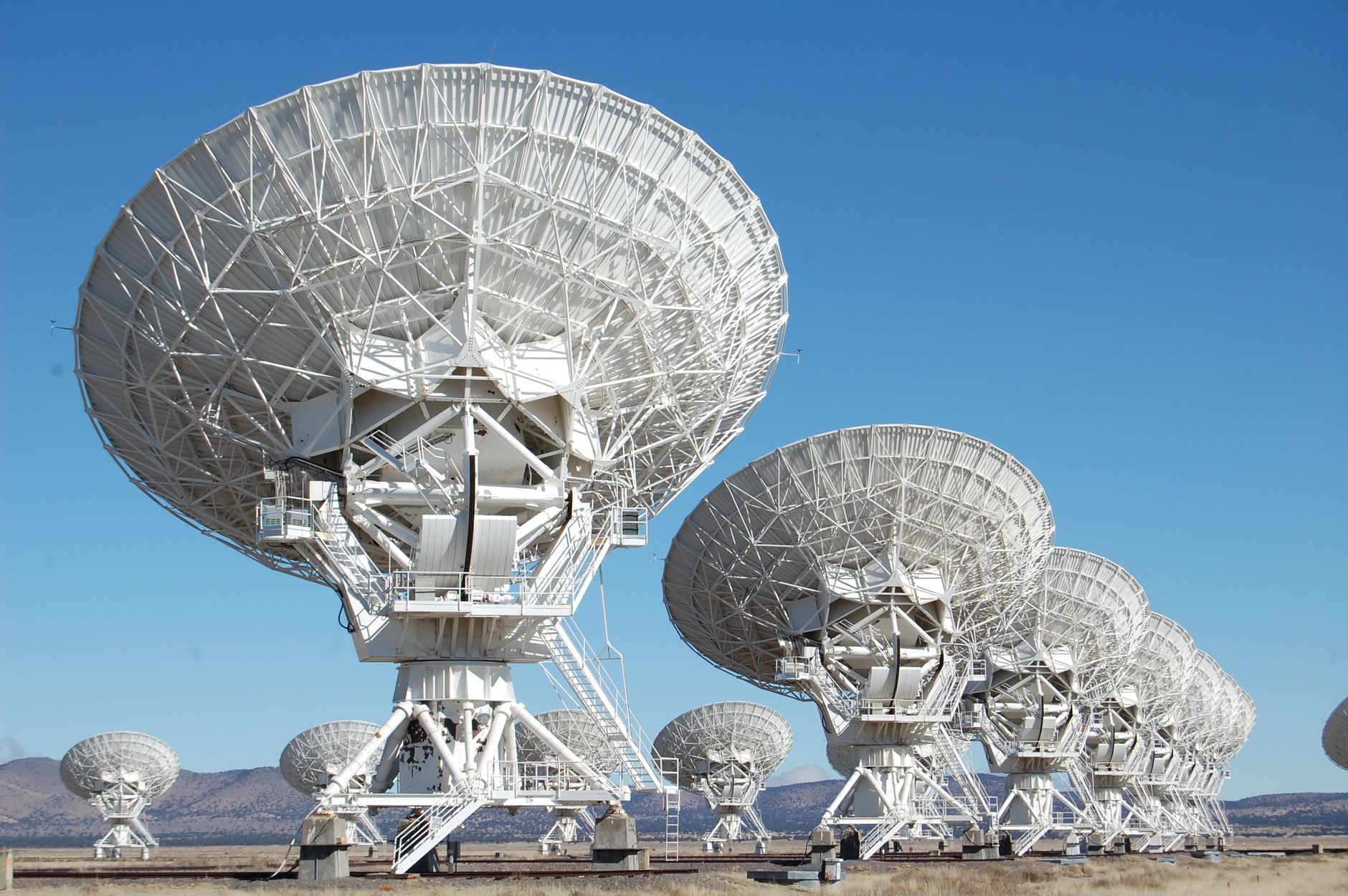
China’s FAST telescope has achieved remarkable feats in astronomy, discovering over 1,300 pulsars during its decade of operation.
Overview of China’s FAST Telescope
China’s FAST telescope, officially known as the Five-hundred-meter Aperture Spherical Telescope, has made significant strides in the field of astrophysics since its inauguration in 2016. Located in a natural depression in Guizhou province, this remarkable instrument boasts the world’s largest single-dish radio telescope, enabling it to capture celestial signals with unprecedented clarity.
Over the past decade, FAST has proven to be a powerful tool for exploring the universe, particularly in the study of pulsars. These highly magnetized, rotating neutron stars emit beams of electromagnetic radiation, which can be detected by advanced telescopes like FAST. The telescope’s advanced design allows it to sift through vast amounts of data efficiently, leading to groundbreaking discoveries.
As of now, FAST has successfully identified over 1,300 pulsars, significantly enriching the scientific community’s understanding of these fascinating celestial objects. The discoveries not only highlight the telescope’s capabilities but also open up new avenues for research in areas such as gravitational waves, fundamental physics, and the study of dark matter.
In summary, China’s FAST telescope stands as a testament to human ingenuity and the quest for knowledge beyond our planet.
Significance of Pulsar Discoveries
The discovery of pulsars by China’s FAST telescope has profound implications for both astrophysics and our understanding of the universe. Pulsars, which are highly magnetized rotating neutron stars emitting beams of electromagnetic radiation, serve as cosmic lighthouses, providing valuable insights into the fundamental laws of physics.
Through its decade of operation, the FAST telescope has significantly contributed to the catalog of known pulsars, allowing scientists to:
- Enhance our knowledge of stellar evolution: The study of pulsars helps astronomers understand the life cycles of massive stars and the processes that lead to supernovae.
- Test general relativity: Pulsars in binary systems offer unique opportunities to test Einstein’s theories under extreme gravitational conditions.
- Investigate gravitational waves: The precise timing of pulsars can be used to detect ripples in spacetime caused by merging black holes or neutron stars.
- Explore the interstellar medium: Pulsar signals can reveal information about the structure and density of the material between stars.
Overall, the achievements of China’s FAST telescope in pulsar discoveries are paving the way for new research and explorations into the mysteries of the cosmos.
How FAST Telescope Works
The FAST telescope, located in Guizhou province, operates by utilizing a large dish made of thousands of triangular panels that work together to collect radio waves from space. This impressive structure spans 500 meters in diameter, making it the world’s largest radio telescope. Its design allows it to detect faint signals from distant celestial objects, including pulsars, which are highly magnetized rotating neutron stars that emit beams of electromagnetic radiation.
The telescope’s advanced technology includes a unique observation system that employs a combination of receivers and signal processing capabilities. These tools enable scientists to accurately measure the frequency and timing of the pulsar signals, which are crucial for understanding their properties and behavior. With its high sensitivity and wide frequency range, the FAST telescope can scan large portions of the sky, leading to the discovery of numerous pulsars.
Moreover, FAST’s ability to conduct rapid follow-up observations enhances its effectiveness in pulsar research. By continuously monitoring the same areas of the sky, researchers can identify new pulsars and study their characteristics in detail. This innovative approach has positioned China’s FAST telescope as a leading instrument in the quest to uncover the mysteries of the universe.
Impact on Astronomy
The impact of China’s FAST telescope on the field of astronomy has been profound, particularly in the study of pulsars. Since its inauguration, this powerful instrument has significantly enhanced our understanding of these rapidly rotating neutron stars, providing insights that were previously unattainable.
One of the most notable contributions of the FAST telescope has been its ability to detect a remarkable number of pulsars, exceeding 1,300 in just a decade of operation. This achievement not only demonstrates the telescope’s advanced capabilities but also its potential to revolutionize astronomical research.
The discoveries made by FAST are crucial for several reasons:
- Increased Understanding: The data collected enhances our knowledge of pulsar characteristics and behaviors.
- Testing Theories: New pulsar discoveries provide opportunities to test theories of gravity and fundamental physics.
- Astrophysical Insights: These findings may help decipher the mysteries of the universe, including dark matter and the origins of cosmic rays.
As a cornerstone of modern astrophysics, China’s FAST telescope continues to pave the way for future discoveries, highlighting its essential role in expanding the horizons of our cosmic understanding.
Future of FAST Telescope
The future of China’s FAST telescope looks promising as it continues to push the boundaries of astrophysical research. With over 1,300 pulsars discovered in just a decade of operation, the telescope has demonstrated its capability as a leading instrument in the field. Researchers anticipate that ongoing observations will yield even more significant findings, potentially uncovering new pulsar types and further insights into gravitational waves.
In addition to pulsar studies, the FAST telescope is expected to contribute to a wide range of astrophysical phenomena, including dark matter research and the exploration of exoplanets. Enhanced technological upgrades and collaborations with international researchers may also expand its capabilities, making it a pivotal player in global astronomy efforts.
Furthermore, as machine learning and data analysis techniques improve, FAST’s ability to process vast amounts of data will enhance its discovery potential. Scientists are eager to see how these advancements will impact future studies and encourage new theories about the universe.
Overall, the FAST telescope stands as a testament to China’s commitment to advancing space exploration and understanding the cosmos, promising a bright future for astronomers worldwide.
Recent Discoveries and Findings
In its first decade of operation, China’s FAST telescope has made significant strides in the field of astrophysics by discovering over 1,300 pulsars. These rapid-spinning neutron stars emit beams of radiation that can be detected from Earth, providing valuable insights into the universe’s fundamental workings.
Among the notable findings from the FAST telescope are:
- Newly Identified Pulsars: The telescope has identified several pulsars that were previously unknown, expanding the catalog of these celestial objects.
- Unique Pulsar Systems: FAST has discovered pulsars that are part of binary systems, offering a deeper understanding of their gravitational interactions.
- Study of Extreme Physics: Observations have revealed extreme physical conditions surrounding pulsars, shedding light on neutron star properties.
- Impacts on Theoretical Models: The discoveries challenge existing theoretical models and contribute to advancements in gravitational wave research.
The discoveries made by China’s FAST telescope not only enhance our knowledge of pulsars but also play a crucial role in the broader understanding of the universe, paving the way for future astronomical research and exploration.
China’s FAST telescope has significantly enhanced our understanding of pulsar behavior and characteristics. Through its groundbreaking observations, China’s FAST telescope has already made several notable discoveries that challenge existing theories in astrophysics.
Photo by braincontour on Pexels
Read the original
You might also like
UP Legislative Council polls: Clear Schedule Announced · Camp Mystic Investigation: The Worst Consequences Revealed · Midterm Lead Independents: Democrats Gain Ground Against Trump